
Some people do not struggle in friendship because they do not care enough. They struggle because caring became the role they learned to play.
They are the one who remembers. The one who checks in first. The one who softens the tension. The one who makes things easier for everyone else. They are often the person people trust most, rely on most, and thank most. From the outside, they can look like they are very good at friendship. They are thoughtful, loyal, steady, emotionally aware, and easy to lean on. They are often the ones people describe as mature.
And still, they go home lonely.
That is the contradiction underneath this article. Not, I have no friends. Not even, My friends are terrible. Something more confusing than that. The friendship works. The texts are there. The plans are there. The history is there. The connection still exists. But inside the relationship, something essential keeps going hungry.
The caretaker keeps friendship functioning by giving more. The peacekeeper holds the friendship together by softening, yielding, and smoothing over what feels hard.
The invisible one holds it together by asking for less and taking up less space.
Then both end up wondering why they still feel lonely, without seeing that friendship grows through mutual give-and-take, not just one person keeping everything manageable.
Why do the caretaker, the peacekeeper, and the invisible one struggle so much in friendship?
The caretaker, the peacekeeper, and the invisible one often struggle in friendship because they are the ones keeping it together. They give more, soften more, or ask for less. That may keep the connection intact, but it can also strip the friendship of mutuality and leave them feeling lonely inside it.
The role keeps the friendship working
That is part of the trap. The role works so well that almost nobody questions it.
The caretaker is useful. The peacekeeper is calming. The invisible one is easy to keep around. These roles reduce friction. They help other people feel supported. They make the relationship feel smoother and easier to maintain. Because the role is functional, it gets rewarded. People praise the caretaker for always showing up. They respect the peacekeeper for being calm and composed. They describe the invisible one as easy, low-drama, and low-maintenance.
The role helps the room, so the room keeps rewarding it. What often goes unseen is the cost. The friendship may be working, but the person inside the role may be shrinking. Over time, the role stops feeling like something they learned and starts feeling like their personality.
The caretaker tells themselves, I’m just a caring person.
The peacekeeper thinks, I’m just mature.
The invisible one thinks, I’m just low-maintenance. But the role may be doing much more than expressing personality. It may be protecting connection by limiting something essential.
The strategy protects connection but limits something essential
This is the deeper issue in all three roles.
The caretaker learns not to need too much.
The peacekeeper learns not to bring tension.
The invisible one learns not to take up much space at all.
All three may keep the friendship running more smoothly, but they also remove something deeper that real friendship needs.
Your source base is especially clear on one point: social support is not the same thing as simply being around people. Reciprocity, being truly heard and seen, and feeling held in someone else’s mind and heart matter deeply. Close friendships can also serve important attachment-like functions when communication is consistent, sensitive, and effective.
That is why these roles hurt. They may keep the relationship alive, but they can leave reciprocity underdeveloped. The friendship may stay stable while mutuality stays thin.
The friendship may survive while the person stays under-met
This is one of the most painful truths in the whole article. A friendship can remain active, affectionate, and long-standing while still leaving one person emotionally under-met.
The plans still happen. The conversation still happens. The care may even be real. But if one person keeps carrying, softening, or disappearing in order to keep the bond intact, the relationship can continue for years while loneliness quietly deepens inside it. That loneliness is not random. It usually makes sense.
What does the caretaker struggle with in friendship?
The caretaker often struggles because they are valued for how much they give while their own needs stay underexpressed and under-met. They may become central to the friendship’s function while still feeling emotionally deprived inside it.
They know how to care for other people but not always how to receive care
Caretakers are often remarkable at noticing other people. They remember details, sense emotional shifts quickly, ask thoughtful questions, and make room for other people’s pain without making it about themselves. They know how to comfort, guide, encourage, and steady. What they often do not know how to do is say, I need comfort too. Or, I’m not okay. Or even, I don’t want to be the strong one right now.
That is not because they have no needs. It is often because expressing need feels less familiar, less safe, or somehow more costly than expressing care.
Schema therapy is especially useful here. It describes self-sacrifice as a pattern where a person focuses intensely on meeting other people’s needs while their own needs go underexpressed or unmet. It also notes that these people often listen more than they talk about themselves, redirect attention back to others, and feel uncomfortable when care turns toward them.
So the caretaker can become highly valued in friendship while still feeling strangely untouched by it.
Their generosity can hide their deprivation
This is where the role becomes especially confusing. The care is not fake. The love is not fake. The tenderness is not fake. That is why the pattern can be so hard to confront.
And still, generosity can hide deprivation. Schema therapy explicitly links self-sacrifice to emotional deprivation. A person can become highly practiced at caring for others while quietly carrying the feeling that their own needs are not adequately met. Over time, the give-get ratio becomes unhealthy, even if nobody in the friendship is trying to be cruel.
This is why some caretakers are so hard to help. They have built a whole relational life around giving what they secretly want to receive, and because the giving is beautiful, almost nobody sees the hunger underneath it.
They often confuse being needed with being loved
Being needed feels powerful. It gives the caretaker a place. It makes them feel important. It can even feel like proof that the bond is real. If people call you first in a crisis, lean on you, and trust you with their hardest moments, of course that is going to feel meaningful.
But being needed is not the same as being known. Caretakers often only see this when they finally stop overdoing it. They pull back. They stop jumping in first. Stop smoothing everything out. Stop carrying things no one actually asked them to carry.
And then the real question shows up: Did this friendship love me, or did it love what I did for it? That question stings because sometimes the answer is mixed.
Why do peacekeepers feel lonely in friendship?
The peacekeeper often struggles because they maintain closeness by reducing friction. Over time, that can make honesty feel dangerous, conflict feel costly, and directness feel like a threat to belonging.
They keep the relationship calm by keeping themselves small
Peacekeepers are often praised as emotionally mature. They do not overreact. They know how to read the room. They know how to let things go. They know when not to say the thing.
Sometimes that really is maturity. Sometimes it is fear with excellent manners.
The peacekeeper often keeps the friendship calm by shrinking the part of themselves that wants to say, That hurt, or, That wasn’t okay, or, I’m tired of being the one who understands everything first. They become very good at preserving ease. They become much less sure whether the friendship could survive the full truth of what they feel.
They know how to prevent rupture but not always how to survive honest tension
This is the hidden cost of chronic peacekeeping. The peacekeeper becomes highly skilled at avoiding escalation. They can sense the shift in the room before anyone else names it. They soften the text. They joke instead of confronting. They explain the other person’s behavior before the other person has to examine it. They can predict fallout and organize around preventing it.
Your trauma sources help explain why that kind of vigilance can become automatic. Adaptation to threat can make people exquisitely tuned to changes in tone, face, pacing, and danger cues. Placating, softening, and scanning can become protective strategies rather than conscious choices. That does not mean every peacekeeper is carrying trauma. But for some people, keeping the peace in friendship is more than a trait. It is an overlearned way of staying connected when honesty feels risky.
They often call silence wisdom
Peacekeepers usually have very respectable reasons for not speaking.
It’s not worth bringing up.
I don’t want to make it bigger than it is.
I’m trying to be mature.
I know how they are.
I’m protecting the friendship.
Sometimes those statements are wise. Sometimes they are what fear sounds like after it has learned how to speak well. The problem is that a friendship cannot become truly safe if one person is always doing emotional cleanup before reality even gets in the room. If the relationship only holds because one person keeps swallowing tension, then the peace is not as solid as it seems.
Why do I feel invisible in friendship even when I’m included?
The invisible one often learns to stay connected by being easy, low-demand, and hard to burden. They may still be part of the friendship, but they often feel unseen inside it.
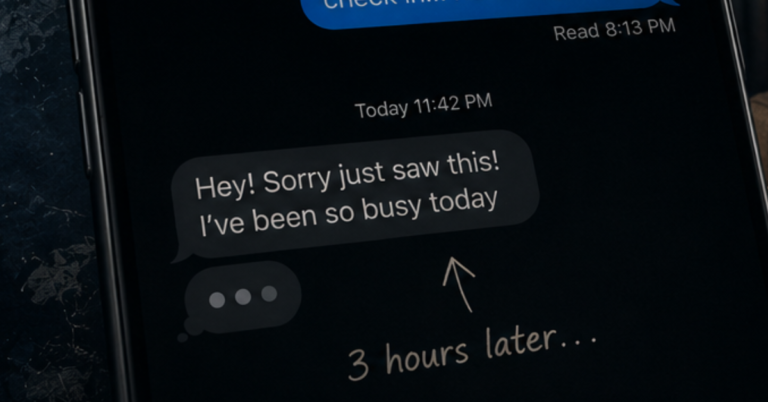
They are easy to have but hard to know
The invisible one is usually not excluded in obvious ways. They are in the group, in the plans, in the texts, and often genuinely liked. That is what makes the invisibility so confusing.
They are easy to have around. They do not take up much space. They do not ask for much. They do not make things complicated. They seem fine even when they are not. They know how to keep a friendship comfortable by keeping themselves light.
That makes them easy to include. It does not make them easy to know.
They often learned that visible need complicated connection
This is one of the deepest mechanisms in the whole article. Some people do not become invisible by accident. They become invisible because visible need once felt costly.
One attachment source in your files puts it sharply: when needs are blocked often enough, people can learn to live as if they do not really have them.
That line belongs here. The invisible one often learned that burdening people created distance, guilt, irritation, or shame. So they adapted. They became lower-maintenance. Less expressive. Harder to burden. Easier to keep. That adaptation may have preserved the connection. It also made them easier to miss emotionally.
They can disappear while being fully present
This is a strange kind of pain because it does not look like absence from the outside. The invisible one is at the table. They are listening. They are remembering everyone else’s life. They are replying in the thread. They are physically there.
And still, some deeper part of them is missing. Not because they are lying. Because almost no one has learned how to come look for them there.
That is what the invisible one struggles with most. Not just absence from others. Absence from the emotional center of the friendship.
Why do these three roles all lead to the same kind of loneliness?
The caretaker, the peacekeeper, and the invisible one look different on the surface, but all three often trade mutuality for manageability. They keep the connection alive by reducing friction, direct need, or uncertainty, which can leave them valued yet lonely.
All three are trying to protect the bond
The caretaker tries to keep the bond by giving more. The peacekeeper does it by softening more. The invisible one does it by needing less.
Different role. Same direction. Each role tries to make friendship safer by becoming easier to hold, easier to like, easier to rely on, and easier to keep close without disruption. That is why these roles often feel familiar to people who grew up around unpredictability, criticism, emotional deprivation, or unstable care. The role made sense somewhere. That is what makes it so hard to challenge now.
All three create a function before mutuality
This is the uncomfortable truth. The friendship works. The caretaker keeps it emotionally fed. The peacekeeper keeps it from splitting open. The invisible one keeps it light and low-friction. Function is happening. Smoothness is happening. Continuity is happening.
Mutuality does not always happen. And mutuality is what the body is usually starving for. Not just being useful. Not just being tolerated. Not just being included. Reciprocal knowing. Direct care. Enough honesty that the relationship can hold two real people. Under all of this, the same needs keep showing up: to be seen, heard, met with consistency, treated with care, and trusted enough that closeness feels safe instead of just social.
All three get praised for the very thing that drains them
This may be the line the reader remembers: the room praises what is slowly draining you.
You’re such a good friend.
You always keep the peace.
You’re so easy to be around.
You never make things difficult.
I can always count on you.
None of that praise is fake. The praise is not the problem. The problem is when the praise becomes a mask over the cost.
That is when the role becomes dangerous. When it is so socially rewarded that the pain inside it starts sounding selfish, dramatic, or ungrateful.
Why do these roles start feeling like personality instead of patterns?
These roles can become so practiced that they begin to feel like personality instead of adaptation. Over time, the caretaker thinks they are “just caring,” the peacekeeper thinks they are “just mature,” and the invisible one thinks they are “just low-maintenance.”
The caretaker starts calling overgiving love
This is one reason the caretaker role is hard to interrupt. They are not pretending to care. They really do care. So when the overgiving becomes costly, it is easy to miss. It still feels like goodness. It still feels like character. It still feels like love.
But some expressions of love are also old strategies.
The peacekeeper starts calling self-suppression wisdom
The peacekeeper can become so identified with calm, restraint, and emotional management that they forget to ask whether the friendship can actually hold truth. They say they are choosing peace. Sometimes they choose disappearance.
The invisible one starts calling the absence of need maturity
This one sounds especially respectable.
I’m easygoing.
I’m just independent.
I don’t need much.
I’m not dramatic.
Maybe. Or maybe visible need stopped feeling safe a long time ago, and now the adaptation sounds like personality.
In ACT, Acceptance and Commitment Therapy, it separates the roles a person plays from the larger self that is not reducible to those roles. That gives us a clean way to say this without overstating it: what feels like personality may sometimes be a role that worked so well it stopped looking like a role.
What helps the caretaker, the peacekeeper, and the invisible one in friendship?
Things often start changing when you realize these are roles you learned, not your destiny. Healthier friendships usually need more direct communication, more honest tension, more room to be your own person, and more mutual care.
First, you have to stop confusing the role with the self
This matters more than it sounds. The caretaker does not need to become cold. The peacekeeper does not need to become explosive. The invisible one does not need to become louder than they are.
They do not need less heart. They need less fusion with the form their heart learned to take. That is a very different kind of change.
Then, you have to notice where the friendship only works when you are performing
This is where the pattern gets exposed.
What happens when the caretaker asks for help directly?
What happens when the peacekeeper names the hard thing without softening it into nothing?
What happens when the invisible one stays visible for one extra beat instead of disappearing?
That is when the friendship tells the truth. Sometimes it deepens. Sometimes it gets awkward. Sometimes it shows you how much of the connection depended on you staying in the old role. That is painful, but it is clarifying.
Finally, you need friendships that can hold reality, not just roles
This is the actual hope in the article. A healthier friendship does not ask one person to carry all the care, all the calm, or all the quiet.
It allows care to move both ways. It allows tension without collapse. It allows a person to have needs without becoming “too much.” It allows someone to be visible without becoming a burden. This is where awareness and real connection start to matter a lot.
What keeps showing up underneath all of this is the need for relationships with mutual care, honest attunement, and enough safety that two people can actually know each other, receive each other, and help settle each other. Not less friendship. More honest friendship.
What should a healthy friendship feel like instead?
A healthy friendship does not ask one person to carry all the care, all the calm, or all the quiet. It has room for direct need, honest tension, space to be your own person, and care that moves both ways.
It can hold care without assigning one permanent caretaker
Care should move. One person may carry more in one season than another in another season. But if one person is always the emotional provider and never the emotional receiver, something essential stays thin.
It can hold tension without requiring one permanent peacekeeper
A healthy friendship does not depend on one person always smoothing things over before real life can land.
It can handle awkwardness. Boundaries. Disappointment. Hard truth. Not in a perfect way. In an honest one.
It can hold visibility without rewarding disappearance
A healthy friendship should not require you to become easy to carry in order to belong. It should make room for your need without shaming it, your visibility without punishing it, and your reality without rewarding your erasure.
That does not mean perfect friends. It means less performative friendship. Less role-based friendship. Less loneliness hidden inside connection.
A healthy friendship should not require you to disappear to keep it alive
That is the final line. A healthy friendship should not require you to disappear to keep it alive.
Not through overgiving.
Not through over-softening.
Not through self-erasure.
The caretaker deserves to be met, not just leaned on. The peacekeeper deserves a friendship that can survive reality. The invisible one deserves to be known without having to become louder than they are.
Some roles once protected connection. That does not mean they should keep running your life.
And if this article stirred something heavier than friendship alone, older fear, deeper grief, or a pattern that feels linked to trauma, family history, or long-standing shame, it may help to work through that with a trusted therapist, counselor, pastor, or grounded support person.
Because some struggles in friendship are not shallow. They are the emotional afterlife of how a person learned to belong.
FAQ
Why do caretakers struggle in friendship?
Caretakers often struggle because they are valued for how much they give while their own needs stay underexpressed and unmet. They may become central to the friendship’s function while still feeling emotionally deprived inside it.
Why do peacekeepers feel lonely in friendship?
Peacekeepers often keep things smooth by softening the truth, holding in tension, or trying to manage how other people feel.
That can keep the friendship looking calm, while quietly making deeper mutuality harder to grow.
Why does the invisible one feel unseen even when included?
The invisible one often stays connected by becoming easy to carry and low-demand. They may remain included socially while still feeling emotionally unknown or unmet.
What is the difference between caring and caretaking?
Caring is part of a healthy friendship. Caretaking usually becomes more one-sided and identity-based. It often involves overfunctioning for other people while one’s own needs stay hidden or neglected.
Is peacekeeping the same as emotional maturity?
Not always. Sometimes peacekeeping reflects wisdom and restraint. In other cases, it can become a way of avoiding honest tension because conflict feels costly or unsafe.
Why do low-maintenance people feel lonely?
In some cases, “low-maintenance” means a person has learned to hide need or take up less space relationally. That can make them easy to keep around while still leaving them emotionally unseen.
Can friendship feel lonely even when people appreciate you?
Yes. Appreciation is not always the same as reciprocity or mutual knowing. A person can be valued for their role and still feel lonely in a friendship.
What does mutuality in friendship actually look like?
Mutuality usually includes reciprocity, being heard and seen, direct need, honest tension, and care that moves both ways over time.
How do I stop being the one who always gives more?
Start by noticing where the friendship depends on you playing a certain role to stay emotionally steady. Then watch what happens when you give less, smooth less, or make your need more visible.
What should a healthy friendship feel like instead?
Healthier friendships usually feel less performative and less fragile. There is more room for honesty, more reciprocity, more visibility, and less pressure to disappear inside a role.