
You still care about your friends.
That is what makes this so confusing.
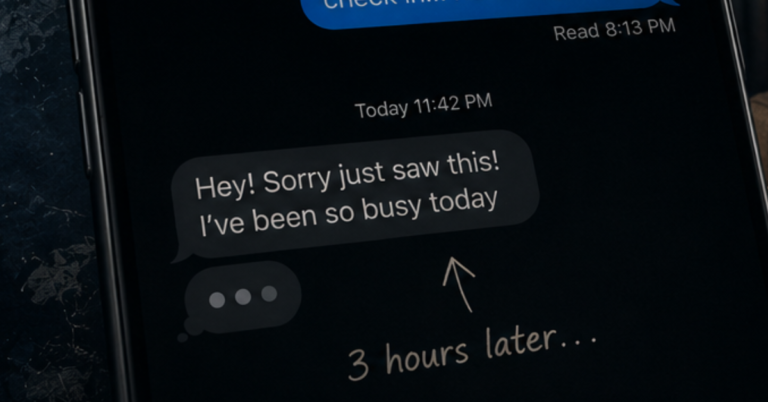
You still answer the call. You still send the thoughtful reply. You still want to be there. You still know how to say the kind thing, ask the right question, and make someone feel less alone. But something in you feels flatter than it used to. Harder to reach. Less warm on demand. Their name lights up your phone, and before you even read the message, part of you feels tired.
Not cruel or heartless, but tired in a way that feels deeper than sleep.
A lot of people feel ashamed of that. They think it means they are becoming selfish. Less loving. Less patient. Less emotionally available. But sometimes the deeper truth is not that you care less. Sometimes it is that you have been carrying too much for too long, and your system has started protecting itself the only way it knows how.
For some people, being the helper friend becomes a long-term emotional job: you are the one who absorbs, who steadies, listens, calms, tracks, remembers, reassures, and holds. Over time, the role quietly outruns your capacity. Eventually, numbness starts showing up where warmth used to be.
Why do I feel emotionally numb around my friends even though I still care?
Feeling numb around your friends does not automatically mean you care less. In some cases, it may mean you have been carrying so much emotional weight for so long that your system has started protecting itself through flatness, distance, or shutdown.
Numb does not always mean cold
Numb is not always the same as uncaring. Flat is not always the same as selfish. Pulling back internally is not always proof that you have become a worse person.
Sometimes numbness is what happens when your system has had too much exposure to emotional demand without enough recovery, reciprocity, or direct support. In these scenarios, numbness is protective, not la ack of caring.
The distinction is vital because many helper friends misread their own shutdown. They think, What is wrong with me? Why am I reacting like this? Why do I feel less than I used to? But the better question is often, what has my system been trying to carry without enough relief?
Your system may be overloaded, not heartless
When people talk about emotionally draining friendships, they usually focus on the other person. The clingy friend. The always-crisis friend. The friend who unloads too much. Sometimes that is accurate. Sometimes a friendship really is one-sided in a way that becomes damaging.
Sometimes the more important question is not only, Why are they so much? Sometimes it is. Why have I become so absorbent?
That is a different conversation.
If you have become the person who listens, carries, calms, interprets, and steadies for everyone else, then emotional overload may build long before you consciously admit you are exhausted. You may still look functional. You may still sound caring. You may still be saying all the right things. But internally, your system may already be reducing access to feeling because it cannot keep absorbing at full volume forever.
You may be emotionally saturated, not emotionally gone
Emotionally gone sounds like character failure. Emotionally saturated sounds like a capacity failure. One sounds moral. The other sounds physiological, protective, and human.
For some people, the helper role slowly turns into saturation because the friendship stops being a place where care moves both ways and starts becoming a place where one person is the emotional shock absorber. Once that role sets in, numbness can become less a sign of indifference and more a sign that your inside has started going quiet in self-defense.
Some people do not stop caring. Their system stops being able to keep feeling this much for this long.
Why is being the helper friend so emotionally draining?
Being the helper friend becomes emotionally draining when friendship starts organizing around your emotional availability, steadiness, and absorptive capacity. You become the one who holds more than you get back.
You are not just listening; you are absorbing
You are not only listening. You are absorbing.
You are taking in tone, panic, sadness, relationship drama, family tension, disappointment, helplessness, confusion, and fear. You are not just hearing words. You are metabolizing emotional charge. You are helping other people come back down. You are often doing that while staying regulated enough to sound thoughtful, warm, and kind.
That is work.
A lot of helper friends do not count it as work because they are good at it. They think, I’m just listening. I’m just being there. I’m just a caring person. But emotional labor is still labor, even when you do it gracefully.
The role asks you to hold more than you get back
This is where friendship stops feeling mutual and starts feeling costly.
Schema therapy describes self-sacrificing people as those who focus on others’ needs, ask questions but say little about themselves, act stronger than they feel, and often do not allow others to care for them in return. It also says the give–get ratio becomes unhealthy over time.
That is almost the helper-friend dynamic in plain English.
You hold more than you get back. You know more about what is happening in them than they know about what is happening in you. You make space more easily than you take up space. You offer more emotional presence than you receive. That imbalance may not feel dramatic at first. Over time, it becomes heavy.
Emotional labor gets heavy when reciprocity stays thin
Helping can feel meaningful for a while. It can even feel intimate. It gives you a role, creates value, and gives you relevance. But if the friendship keeps taking emotional labor without growing enough reciprocity, something in you will eventually start protesting.
Maybe not out loud, but through resentment. Avoidance. Flatness. Delayed replies. Dread when their name appears. Less access to warmth. More emotional blankness.
That does not make you mean, it does mean the friendship has asked your caring role to do more than your capacity can keep doing without cost.
Why do I secretly feel done even though I still love my friends?
You can care about your friends and still feel secretly done when your role in the relationship keeps asking for emotional labor without enough replenishment, mutuality, or recovery.
Caring and capacity are not the same thing
You can care deeply and still not have capacity or the emotional room for another round of carrying their chaos. You can want good things for them and still feel your body recoiling from one more message, one more spiral, one more late-night emotional download.
That conflict creates shame because people confuse caring with endless availability. They think, If I really loved them, I wouldn’t feel this way. But love and capacity are not the same system; your heart can still care while your nervous system is already maxed out.
You can love people and still have nothing left to give
A lot of helper friends need permission to admit this sentence.
You can love people and still have nothing left to give.
Not because you are empty in some permanent way. Because you are full in an overfull way. Full of other people’s pain. Other people’s pressure. Other people’s unmet need. Other people’s stories that you have been helping hold without enough room to set them down.
If you keep making kindness the measure of whether you should keep giving, you will miss the more accurate question: What is this costing me now?
Feeling done can be a sign of overload, not meanness
The phrase “secretly done” is strong because it names something many people feel and do not want to admit. You still care, but part of you is over it. Not because the friendship means nothing. Because the role has become too heavy.
Your framework says symptoms often protect something, and that the real question is not merely how to reduce the symptom, but what it is organizing, protecting, preventing, or managing.
That is a useful lens here.
Feeling done may be protecting you from further overload. Flatness may be your system’s way of reducing intake. Distance may be a crude but understandable attempt to keep from absorbing more than you can metabolize.
The problem may not be that your heart got smaller. It may be that your load got too big.
Why do I always become the one who carries everyone?
For many people, the helper-friend role is not random. It can become the default way they enter closeness: by being useful, available, emotionally absorbent, and easy to lean on.
Some people only know how to matter by being useful
Some people do not only help because they are kind. They help because usefulness has become one of the safest ways they know to belong.
If you are the reliable one, the soothing one, the emotionally literate one, the one who can handle things, then helping is not only an action. It is a role. It is often how you matter. It can become the way you enter closeness before anything more mutual has had a chance to form.
That is why stepping back can feel so hard. If usefulness has become part of your identity, then doing less can feel like becoming less.
Helping can become the fastest way to secure closeness
Needed creates a lane. If someone is in crisis and you know how to help, then the connection is suddenly clear. You know what to do. You know why you matter. You know how to stay close. Helping can create immediate relevance in a way that simply being present, uncertain, needy, or unfinished may not.
That is one reason the helper role reinforces itself. It works. The more it works, the more natural it feels. The more natural it feels, the less visible it becomes.
The role works, so it keeps getting reinforced
This is where behavior, identity, and emotion start looping together.
People tend to act in ways that preserve identity coherence and repeat what reduces discomfort quickly. It also names roles like “the rescuer,” “the responsible one,” and “the one who has to hold it together” as identity positions people keep preserving, sometimes even when they consciously want relief.
If helping gets you closeness, value, moral pride, or relief from your own uncertainty, then the role will likely keep getting rehearsed. And if it keeps getting rehearsed, it can become so normal that you stop asking whether friendship is only happening because you are carrying so much of it.
How does helping turn into numbness instead of closeness?
Helping stops feeling warm and starts feeling numbing when you keep giving care without enough direct support, processing, recovery, or mutual emotional exchange.
Overgiving can flatten emotion instead of deepen connection
At first, helping may feel like connecting. It may even feel intimate. People trust you. They open up. You matter. The friendship feels emotionally alive because there is real disclosure happening.
But if the disclosure mostly flows one direction, and if your role keeps asking you to hold more while expressing less, something can start to flatten. The thing that once made you feel connected can eventually make you feel used up.
Schema therapy even notes that chronic self-sacrifice can eventually flip into anger, retaliatory withdrawal, or refusing to give anything more after long periods of overgiving. That is important because it shows the pattern can progress from moral goodness into hidden resentment or shutdown when it has been stretched too far.
Your system may reduce feeling to survive the load
The trauma material says hypoarousal can reduce the capacity to sense emotions, diminish emotional processing, interfere with clear thinking, and be misread as depression, resistance, or passivity when it is actually a protective shutdown response.
You do not need to force that label onto every reader. But the principle matters.
Sometimes the system reduces feeling because feeling everything at full intensity is no longer sustainable. Sometimes your inside starts going quiet because quiet is easier than continuing to metabolize endless emotional input without enough support.
What felt meaningful at first can become emotionally deadening over time
That is one of the saddest parts of the pattern.
The role that once made you feel needed, useful, loving, and connected can eventually become the very thing that leaves you flat. What once felt like purpose can start feeling like chronic emotional intake. What once felt like closeness can start feeling like repetitive demand.
Numbness can be what care starts to feel like when it has been constantly demanded and rarely replenished.
Is this just because I have emotionally draining friends?
Sometimes a friendship really is exploitative. But in many cases, the deeper issue is not only that another person takes too much. It is also that the reader only knows how to be useful, available, and emotionally absorbent.
Some friendships really are one-sided
Some people really do take too much. Some friendships really are built on one person unloading while the other carries. Some people do not notice your limits because the relationship has trained them not to. Sometimes the dynamic is genuinely lopsided in a way that is unhealthy.
So this article is not asking the reader to turn all responsibility inward.
Some are draining because you only know how to enter them by carrying
At the same time, the deeper issue is not always just them.
Your brief for this article says most content frames the problem as a toxic-friend issue, when sometimes the deeper problem is that the reader only knows how to be useful, available, and emotionally absorbent.
If helping is your default entrance into closeness, then friendship will continuously keep arranging itself around that role even when the other person is not consciously trying to exploit you. They lean because you make leaning easy. You hold because holding is what you know how to do.
The problem is not always just them; sometimes it is the role too
Sometimes the friendship is draining because of who they are. Sometimes it is draining because of the role you keep stepping into. Often, it is both.
That is what keeps the article compassionate without making it naive.
What should friendship feel like if I’m not stuck in helper mode?
A healthier friendship is not built around one person being the emotional shock absorber. It usually includes more reciprocity, more room for direct need, and less pressure for one person to keep absorbing what the relationship will not help carry.
Healthy friendship needs reciprocity, not just access
Access is not enough. Contact is not enough. Emotional closeness moving mostly one direction is not enough.
Your source base keeps returning to reciprocity, being seen, being heard, and the experience of care moving both ways as the backbone of healthy closeness. If one person is always the holder and the other is always the held, the relationship may feel emotionally active while still staying undernourished.
A healthy friend does not only lean on you; they also notice you
That may be the cleanest line in the whole section.
A healthy friend does not only feel better after talking to you. They also become curious about what is heavy in you. They do not only bring you their overwhelm. They notice your tiredness. They notice your tone. They ask the second question. They help create a friendship in which your internal life matters too.
Your inner world needs support too
That sounds obvious. A lot of helper friends live as if it is not.
They know how to support. They are much less practiced at letting support land. So this section has to say plainly: your inner world needs somewhere to land too. Not just theirs. Not just the crisis. Not just the part of you that knows how to carry.
Yours.
How do I stop being the helper friend when I’m already exhausted?
Change begins by noticing where you keep entering friendship through usefulness, then slowly creating room for less absorbing, more direct need, and clearer limits around what you emotionally carry.
Notice where you are helping past your actual capacity
Not where you are helping beautifully, but where you help past capacity, and go towards your detriment. Where the “yes” leaves you flat. Where the care is real but the cost is rising. Where you are saying the kind thing while your inside already wants out.
You do not need to shame yourself for that. You do need to notice it.
Pay attention to what happens when you stop over-absorbing
What happens if you do less emotional cleanup? What happens if you do not immediately regulate the whole conversation? What happens if you let a text sit longer, answer more simply, or stop carrying the entire emotional tone?
The friendship will often reveal itself there.
Sometimes it grows. Sometimes it gets awkward. Sometimes it shows you how much of the connection was resting on your ability to overhold.
That is painful information. It is still information.
Let friendship include more of your real need, not just your emotional labor
The goal is not to stop caring, the goal is to stop offering care in a way that keeps erasing your own limits. That means more directness. More visibility. More honesty about capacity. More willingness to let the friendship see a self that is not only useful, calm, generous, and emotionally available. A real person. Not just a container.
FAQ
Why do I feel emotionally numb around my friends?
Sometimes emotional numbness in friendship has less to do with caring less and more to do with overload. If you have been carrying too much emotional labor without enough support, your system may begin pulling back.
Can an emotionally draining friend make you feel numb?
Yes. In some cases, one-sided emotional labor in friendship can leave you feeling flat, exhausted, or emotionally done.
Why does being the strong friend feel so exhausting?
Because acting strong can hide your need while inviting more people to lean on you. The role gives you importance, but not always reciprocity.
Why do I care about my friends but secretly feel done?
Because caring and capacity are not the same thing. You can still love people while being emotionally saturated.
What is helper friend burnout?
Helper friend burnout is the exhaustion that can build when you become the person who listens, holds, reassures, and absorbs more than the friendship gives back.
Why do I always become the one who carries everyone?
For some people, usefulness becomes the easiest way to matter in friendship. Over time, that role gets reinforced and starts feeling normal.
Is emotional numbness a sign I’ve become cold?
Not necessarily. In some cases, numbness may be your system’s protective response to carrying too much for too long.
What is friendship emotional labor?
It is the emotional work of listening, soothing, containing, tracking, and helping metabolize other people’s feelings inside a friendship.
How do I stop being the helper friend all the time?
The first is noticing where you are helping to the point where you have blown past your capacity, where you are over-absorbing, and where the friendship has started depending on your emotional labor more than mutuality.
What should healthy friendship feel like instead?
Healthier friendship usually feels more reciprocal. Care moves both ways. Your inner world has somewhere to land too.