
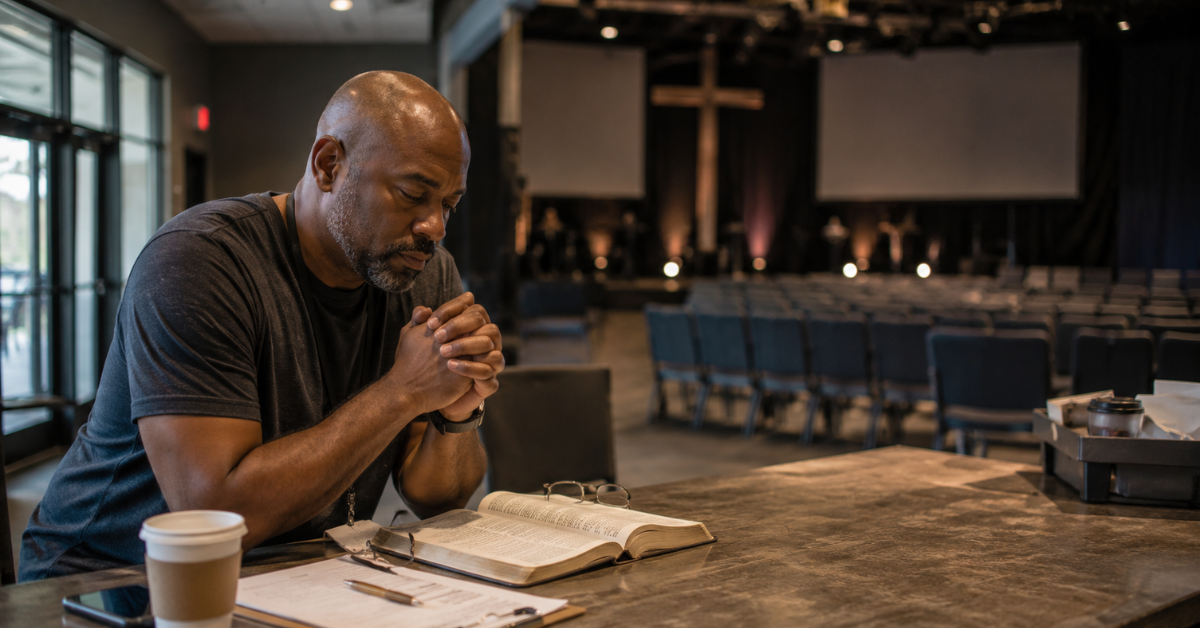
Some people in church look deeply faithful on the outside and quietly feel dead on the inside.
They serve. They show up. They fill gaps. They answer the text. They stay late. They keep helping. They keep telling themselves it is for God. And now they are tired in a way that feels almost sinful.
And people and articles move straight to “rest more” or “pray more,” which may help, but often do not touch the deeper problem. Sometimes the issue is not just the fact that you are tired, but the fact that you have been carrying too much for so long in a spiritual environment that now your overcarrying feels faithful.
This article is not an attack on people’s service, nor is this article stating that sacrifice is bad. It is not saying everyone who serves a lot is unhealthy. But it is naming that sometimes what feels like spiritual weakness is actually accumulated emotional overresponsibility.
Why do I feel guilty for being tired when I’m doing it for God?
For many people, the guilt is not only about fatigue. It is about what fatigue seems to mean. If serving has become tied to faithfulness, worth, or being a “good Christian,” then tiredness can feel less like a limit and more like failure.
Some people do not just feel tired. They feel like tired means they are letting God down
A lot of people in church do not only think, I need a break. They think, What is wrong with me that I need a break? They do not just feel worn out. They feel exposed by their exhaustion. They start wondering whether their fatigue means they are selfish, lazy, less surrendered than they thought, or simply not built for the kind of faithfulness they admire in other people.
Church burnout often feels heavier than regular tiredness because it comes with moral weight. A person can finish serving, sit in their car, and feel exhausted, resentful, and flat, then feel guilty for feeling any of these feelings at all.
When serving becomes morally loaded, exhaustion starts feeling like guilt
Once service stops being something you do and starts becoming proof of who you are, tiredness stops feeling neutral and starts feeling accusatory.
At that point, exhaustion does not just say, “You are running low. It says you are falling short. If you really loved God, this would not feel so hard. It says that if you were truly faithful, you would not be so resistant to helping again. This is why people don’t just need to rest or take a break from serving; they need help untangling what service has come to mean in their inner world.
You may not be failing God. You may have been carrying too much for too long
You may not be spiritually weak. You may not be less devoted than you thought. You may simply be at the end of what your body, emotions, and soul can keep carrying without something finally giving way.
Why does serving at church leave me drained instead of alive?
Service can be deeply meaningful, but it becomes draining when it stops being freely given love and starts becoming compulsion, guilt, carrying too much, or the only way you know how to feel faithful.
Some service is worship. Some service is survival
That distinction matters because both can look similar from the outside. Both may involve sacrifice. Both may involve effort. Both may involve staying late, helping people, and carrying real responsibility. But they do not feel the same underneath.
Service that comes from freedom still has room for honesty, rest, and limits. Service that comes from survival feels tighter. It is harder to interrupt, harder to question, and harder to step back from without shame.
You can love God and still be carrying church in a way that is crushing you
That is part of what makes this painful. A person can be sincere and still overloaded. They can genuinely care about people and still be carrying more than was ever theirs to carry. They can want to serve and still be serving from a place of compulsion, fear, or identity pressure.
So the issue is not always that the service is fake. Sometimes the issue is that the service is real, but the person inside it is slowly being ground down.
When service stops feeling free, your soul usually knows before your theology does
Long before a person can explain what is wrong, they often feel it. They dread the request before they answer it. They resent the interruption before they spiritualize it. They fantasize about disappearing for a week and not being needed by anyone. They notice they are helping with their body clenched.
That is usually a sign worth listening to. Not because every hard season is wrong, but because service that stops feeling free often reveals that something deeper has shifted.
Why is it so hard to say no at church?
For some people, saying no at church does not feel like a simple limit. It feels selfish, disappointing, spiritually wrong, or like they are choosing themselves over God.
Saying no in church can feel morally wrong, not just awkward
There are people who can say no in other areas of life and still freeze when church asks. Work asks for something, and they can delay it. A friend asks for something, and they can think about it. Church asks for something, and something inside them answers before they even check whether they have the capacity.
That is because no in church often feels loaded. It does not feel like a schedule decision. It feels like a spiritual decision.
If your worth is tied to usefulness, boundaries will feel expensive
If being helpful has become one of the main ways you feel good, needed, or spiritually solid, then boundaries will feel costly. They will not just feel inconvenient. They will feel like a threat to identity.
That is why some people can set a boundary and then spend hours feeling guilty afterward. They did not just say no to a task. It feels, internally, like they said no to being the kind of Christian they are trying to be.
Some people are not saying yes out of freedom. They are saying yes because no feels dangerous
Dangerous to belonging. Dangerous to image. Dangerous to how leaders see them. Dangerous to their own sense of self. Dangerous to the story they tell themselves about being faithful.
That is why saying yes can keep happening even when the body is already sending clear signals that the person is running out.
Why does church always end up feeling like too much for me to carry?
Sometimes the issue is not just how much you do. It is how much you quietly believe is your job to hold. That can include other people’s needs, emotions, responsibilities, and even their spiritual outcomes.
You may not just be serving anymore. You may feel responsible for keeping everything okay
This is where the load gets heavier than the task list. A person is not just helping with church. They are quietly monitoring whether everyone is okay, whether the leader is supported, whether the room feels stable, whether people are connecting, whether no one falls through the cracks, whether the ministry keeps moving.
That kind of invisible responsibility is exhausting because it never really shuts off.
Carrying more than your part can look faithful before it starts feeling crushing
This pattern becomes so hard to challenge because it often looks admirable long before it feels unsustainable. The person who absorbs everyone else’s pressure gets praised for maturity. The person who fills every gap, ensuring nothing drops gets praised for faithfulness. The person who keeps everyone else from feeling the weight of failures, mistakes or the weight of decsisions gets praised for sacrifice.
But being the one who always absorbs the pressure is not always a sign of health. Sometimes it is a sign that the person no longer knows where their responsibility ends.
The pressure is not only in the calendar. It is in the role you keep stepping into
Few people are tired because they are busy, most are tired because every role they step into gets loaded with everyone’s responsibilities. The problem is not only activity, it is the meaning, responsibility, and emotional weight they keep attaching to it.
Can church make burnout feel holy?
In some environments, yes. Not because anyone intends harm, but because always being available, never being difficult, and wearing yourself out for everyone else can look admirable before anyone asks what it is costing you.
What gets praised in church is not always what gets healed in church
The person who always shows up gets celebrated. The person who never complains gets trusted. The person who fills every gap gets seen as faithful. The person who disappears for everyone else can easily look deeply mature.
And because it is church, those patterns can be harder to question than they would be anywhere else.
From the outside, wearing yourself out for everyone can look like faithfulness
That is what makes church burnout so spiritually confusing. The very pattern that is hurting you can also be the pattern that gets admired most in you. So the person starts assuming that what is costing them the most must also be what is pleasing God the most.
That is not always true.
Some people learn that being easy to use is the safest way to feel spiritually good
If saying yes gets praised, if availability gets affirmed, if self-denial gets noticed, and if tiredness gets spiritualized, then a person can quietly learn that the safest way to feel faithful is to keep overriding themselves.
That is where burnout starts feeling holy.
How do I know if I’m serving from love or from guilt?
Real service may be costly, but it still has freedom in it. Guilt-driven service often feels tighter, heavier, harder to interrupt, and more fused with your sense of worth.
Love can serve deeply without disappearing
Real love can sacrifice without losing itself. It can give without making depletion the proof that the giving was sincere. It can stay present to limits without treating those limits as betrayal.
That does not make love less costly. It makes it less driven by shame.
Guilt-driven service usually feels harder to slow down, question, or rest from
This is one of the clearest tests. If you imagine stepping back and immediately feel panic, shame, dread, or a collapse in your sense of worth, that tells you something. If the service cannot be questioned without defensiveness, that tells you something. If rest feels like failure instead of wisdom, that tells you something too.
If stopping feels like shame, the pattern may be deeper than generosity
That is the line many people need. The issue may not be that you are extra loving. The issue may be that stopping has become emotionally unbearable. And when that happens, the service is no longer only about helping. It is about preserving a role, a sense of value, or a picture of what it means to be faithful.
What does church burnout actually look like in real life?
Church burnout often looks quieter than people expect. It can look like smiling while depleted, serving while resentful, dreading requests, feeling numb in worship, or secretly wishing no one would ask anything else from you.
It can look like saying yes while your body is already saying no
The request comes in, and your stomach drops. Your chest tightens. Something in you already knows you do not have the space. And still, you answer yes before you even check in with yourself.
That is how church burnout often lives at first: not in public collapse, but in private override.
It can look like resentment you feel ashamed to admit
You start getting irritated by the things you used to call opportunities. You feel annoyed when someone asks one more thing of you. You feel unseen, used and drained. Then you judge yourself for that, because surely faithful people should not feel resentful about helping.
So even your resentment becomes something you carry alone.
It can look like being needed by everyone and nourished by almost nothing
This is one of the saddest parts. A person can be central to the functioning of a church and still feel profoundly uncared for inside it. People know they can count on them, but almost no one seems to notice how low they are running until the person finally breaks or disappears.
It can look like rest feeling impossible even when you are running on empty
They finally get a day off and cannot enjoy it. They feel edgy, guilty, restless, like they should be doing more. The body wants relief, but the mind keeps accusing.
It can look like calling yourself spiritually weak when you are actually overloaded
That may be the clearest summary of the whole section. Many people are not weak in the way they think. They are overloaded and have been taught to interpret overload as failure.
Why does burnout from church feel different than regular burnout?
Because this burnout often comes with moral confusion. You are not only tired. You are trying to figure out whether your tiredness means selfishness, weakness, or failure before God.
Church burnout often feels like spiritual failure, not just fatigue
That is what makes it cut deeper. You are not just trying to recover energy. You are trying to figure out what your low energy means about your heart, your faith, your motives, and your standing with God.
You are not only exhausted. You are scared of what the exhaustion means
It is not just, I need a break. It becomes, What if needing a break means I’m not faithful enough? That is why ordinary burnout advice often feels flat here. The person does not just need practical relief. They need help untangling the spiritual meaning they have attached to the exhaustion.
That is why “just rest more” often does not touch the deeper problem
If rest feels morally suspicious, then rest alone will not solve it. A person can take time off and still feel guilty the whole time. They can recover a little physically while staying trapped spiritually.
The deeper issue is not only a lack of recovery. It is the system of meaning wrapped around the service.
What actually helps when serving at church is burning me out?
Change usually starts by naming the pattern underneath the exhaustion, not only trying to recover from the exhaustion itself. The goal is not just to do less for a week. It is to see what serving has come to mean and where your limits stopped feeling holy enough to honor.
Start by naming where service stopped feeling free and started feeling compulsory
It’s time to tell the truth: where did the joy drain out? Where did your yes lose its freedom? Where did all of this stop feeling like love and start feeling like pressure, both internally and externally?
That naming matters, because vague burnout is hard to heal. Specific patterns can be faced.
Notice what you think will happen if you stop being so available
This question reveals a lot. Will people be disappointed? Will you feel selfish? Will you feel replaceable? Will you lose your role? Will you no longer know who you are if you are not the one carrying so much?
Those fears often tell you more than the schedule does.
Separate serving God from carrying everyone
These are not the same thing, you can be faithful without being responsible for everyone’s emotions, growth, or stability. You can care deeply without treating every unmet need like it’s your God given assignment.
Practice asking for help and receiving care, not only giving it
This matters because many burned-out church people know how to pour out and very little about being poured into. They know how to support, help, and carry. They do not know how to directly say, I need help. I’m low. I can’t keep doing this at this pace.
That shift is often part of real healing.
Set limits before your body has to scream for them
Some people wait until dread, resentment, numbness, or collapse forces the issue. But wisdom is not waiting until your body is on the verge of collapsing just becuase you couldnt say no.
If the pattern is deep, do not turn this into a private war
If church service has become tangled with shame, usefulness, fear of disappointing people, or the need to prove your faith through exhaustion, seek out pastoral care or trauma-informed therapy as it can help you sort out what is yours to carry versus what you need to let go of.
What changes when I stop confusing exhaustion with faithfulness?
The goal here is not you becoming selfish or detached. It is that service becomes freer, rest becomes less morally threatening, and faithfulness stops being measured only by how much of you override your body’s desire to say no.
You stop confusing depletion with devotion
Exhaustion is not proof of sincere Christlike service. You must stop assuming the most faithful version of you is the one who constantly says yes even when they are screaming no inside.
Rest starts feeling more like wisdom than failure
Not instantly easy. But less accusatory. Less like betrayal. More like stewardship. More like honesty.
You can still serve deeply without making exhaustion your proof of love
That is the freedom this article is trying to make possible. Not less love. Not less care. Not less generosity. Just less shame-driven disappearance.
Faithfulness becomes less about disappearing and more about staying honest before God
That is a much deeper kind of service than self-erasure ever was.
Conclusion
A lot of people think the problem is simple: I’m tired, so I must not be doing this right.
But sometimes the deeper truth is this: Exhaustion does not mean you are spiritually weak. Chances are you have been carrying too much for too long in a spiritual environment that made that carrying feel faithful.
Because church burnout is not always about loving God less. Sometimes it is about carrying too much in a place where stopping feels morally wrong.
You may not need more shame.
You may need permission to stop confusing exhaustion with faithfulness.
God may have called you to serve.
But He did not call you to disappear in the process.
FAQ
Why do I feel guilty for being tired when I’m serving God?
For many people, the guilt is not only about fatigue. It is about what fatigue seems to mean. If serving has become tied to faithfulness, worth, or being a “good Christian,” then tiredness can feel less like a limit and more like failure.
What is church burnout?
Church burnout is a form of exhaustion that grows through ongoing service, pressure, over-responsibility, and spiritual guilt. It often feels different from ordinary burnout because it can carry moral confusion, shame, and fear about what the tiredness means.
Why does serving at church leave me drained?
Service becomes draining when it stops being freely given love and starts becoming compulsion, guilt, identity pressure, or the only way you know how to feel faithful.
Is burnout from serving in church a sin?
Not automatically. Exhaustion is not always a sign of disobedience. Sometimes it is a sign that you have been carrying too much for too long and have not felt free to stop.
How do I know if I’m serving from love or from guilt?
Real service may be costly, but it usually still has freedom in it. Guilt-driven service often feels tighter, heavier, harder to interrupt, and more fused with your sense of worth.
Why is it so hard to say no at church?
For some people, saying no at church feels more than awkward. It feels morally wrong, disappointing, or spiritually unsafe, especially if worth has become tied to usefulness.
Can church make burnout feel holy?
In some environments, yes. Not because anyone intends harm, but because always being available, self-denying, and easy to rely on can look admirable before anyone asks what it is costing you.
What helps with burnout from serving in church?
Naming the deeper pattern matters. Many people need more than rest. They need to examine what service has come to mean, where guilt is driving the yes, and how to begin setting limits, receiving care, and separating serving God from carrying everyone.